Reduction in myopia progression at 24 months in the FDA summary of the clinical data.
Authored and medically reviewed by Dr. Jayson Buhler, OD. Published and updated .
Read our editorial policyChildhood myopia management
Stellest Lenses for Childhood Myopia Control in South Ogden, UT
More than clearer vision. Myopia management looks at how quickly your child's nearsightedness may be progressing.
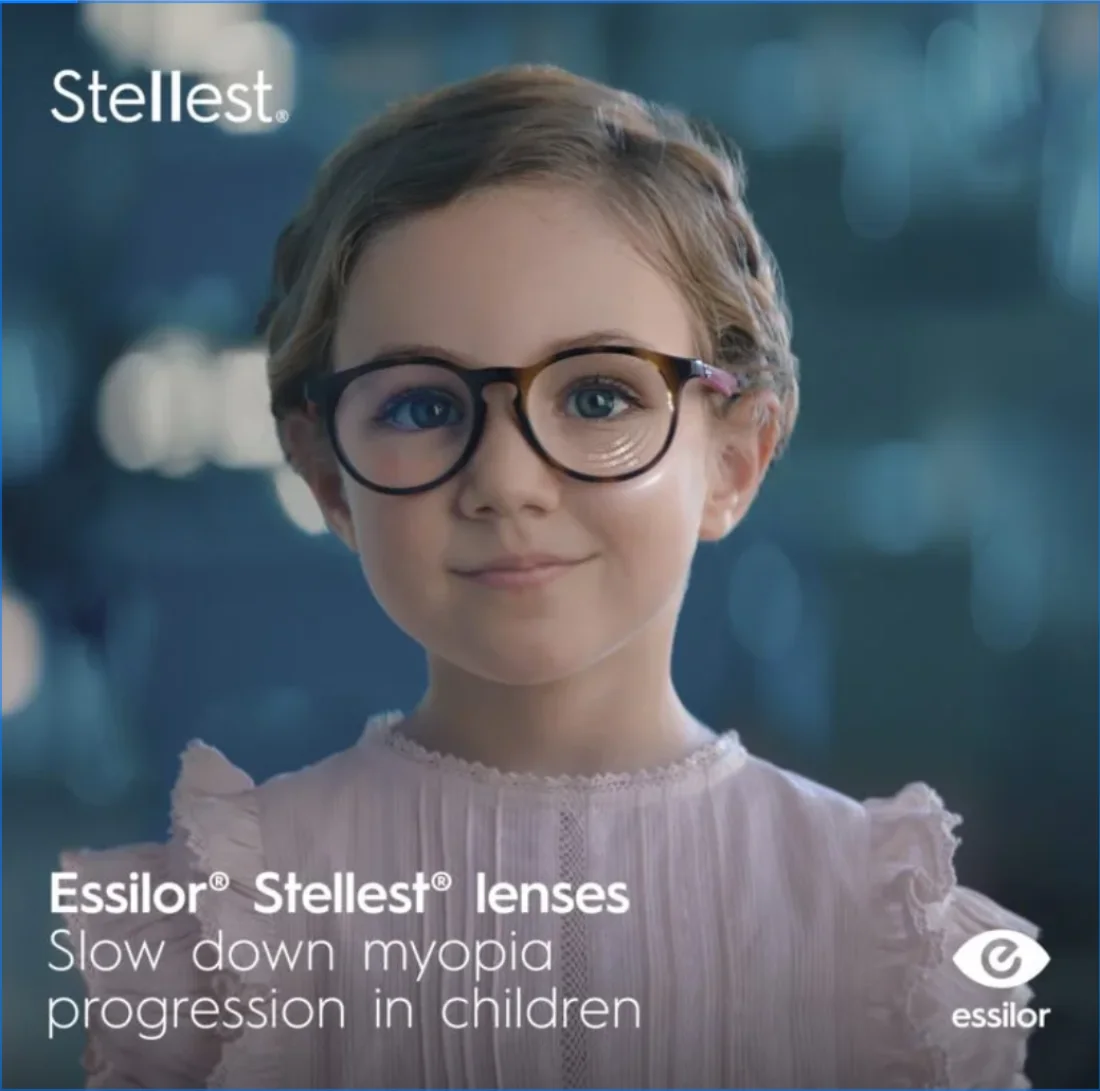
If your child's glasses prescription keeps getting stronger, it may be time to talk about myopia management. Essilor Stellest lenses are prescription spectacle lenses designed to correct vision and help slow myopia progression in eligible children.
Weber Eye Care offers myopia-management guidance for children, including conversations about whether Essilor Stellest lenses are a good fit. An eye exam is needed to determine whether your child is a candidate, and individual results vary.
Quick answer
What are Stellest lenses?
Stellest lenses are prescription spectacle lenses designed for eligible children with myopia. They correct blurry distance vision and are designed to help slow myopia progression. An eye exam is needed to determine whether your child is a candidate.
What is childhood myopia?
Nearsightedness is about more than today's blur.
Myopia means distance vision is blurry because the eye focuses light in front of the retina. In children, myopia often progresses as the eye grows. That is why myopia management focuses on monitoring change over time, not just making vision clear today.
Why regular glasses may not be enough
Standard glasses correct blur, but they do not necessarily slow progression.
A stronger prescription each year can feel normal, but it may be a sign that your child's nearsightedness is still progressing. Myopia management looks beyond clearer distance vision and asks whether there is a reasonable way to slow how quickly the prescription is changing.
If your family is still learning about the bigger picture, Weber's myopia management page gives a broader overview of options like glasses, contacts, and other approaches that may be discussed depending on age and visual needs.
Evidence-based data
Stellest lenses are designed to help slow progression, not cure myopia.
In a September 25, 2025 FDA announcement, the agency authorized marketing of Essilor Stellest lenses for children ages 6 to 12 at treatment initiation. The FDA also summarized two-year data showing a 71% reduction in myopia progression and a 53% reduction in axial elongation compared with single-vision control lenses. Individual results vary.
How Stellest lenses work
Parent-friendly explanation.
The center of the lens helps your child see clearly. The surrounding lens design creates a different optical signal that may help slow the eye growth associated with myopia progression. This is why Stellest is different from a standard single-vision lens.
Reduction in axial elongation at 24 months in the same FDA summary compared with control lenses.
Who may be a candidate?
This may be a good fit if...
- Children with progressing nearsightedness whose prescriptions keep changing.
- Children ages 6 to 12 at treatment initiation, based on the FDA authorization for Essilor Stellest lenses.
- Children who may not be ready for contact lenses yet.
- Families who want a non-contact-lens option for myopia management.
- Children who can wear glasses consistently at school, home, and during daily activities.
- Parents who want to track progression over time instead of only updating stronger glasses each year.
What to expect at Weber
What happens during a myopia control visit?
- Pediatric eye exam
- Prescription and visual needs review
- Myopia progression discussion
- Stellest and other treatment option comparison
- Frame selection and fit
- Follow-up monitoring for progression and day-to-day wear
Only an eye exam can determine whether Stellest lenses are appropriate for your child.
Why parents ask about Stellest
Benefits families often care about most.
Simple daily wear
Stellest lenses are worn like regular glasses, which can be easier for many families than starting with contacts.
Evidence-based option
The FDA summarized two-year data showing less myopia progression and less axial elongation compared with single-vision control lenses.
Non-contact-lens option
Helpful for children who are not ready for contact lenses or families who want to begin with glasses-based treatment.
Local monitoring
Weber can follow changes over time and adjust the plan if another myopia management option starts to make more sense.
When to schedule
Worried your child's prescription keeps getting stronger?
Schedule a myopia management exam at Weber Eye Care in South Ogden, Utah, and we can compare Stellest lenses with other options that may fit your child's age and habits.
Signs families notice first
When it makes sense to ask about myopia control.
- Your child squints at the board or complains that distance vision is blurry.
- Your child sits unusually close to screens or holds books close to the face.
- The prescription keeps increasing from one year to the next.
- A parent has high myopia and you want to discuss risk earlier.
- Your child complains of distance blur during sports, driving with family, or classroom activities.
- A teacher notices that your child struggles to see or loses place visually during schoolwork.
Helpful comparison
Stellest lenses vs regular glasses.
| What to compare | Regular glasses | Stellest lenses |
|---|---|---|
| Distance vision | Correct blurry distance vision. | Correct blurry distance vision too. |
| Myopia progression | Do not necessarily slow progression. | Designed to help slow progression in eligible children. |
| Monitoring needs | Routine prescription updates. | Doctor recommendation and follow-up monitoring are part of the plan. |
| Results | Focused on clear vision today. | Focused on clear vision plus slowing progression over time. Individual results vary. |
Local family care
South Ogden and Washington Terrace families can start close to home.
Weber Eye Care helps families from South Ogden, Washington Terrace, and nearby Weber County communities compare pediatric glasses, myopia management options, and follow-up care without driving across the valley. If your child also needs general pediatric care, you can review our pediatric eye exam page or comprehensive eye exam page.
Trusted references
Source-backed reading for parents who want more detail.
FAQ
Common questions about Stellest lenses.
What are Stellest lenses?
Stellest lenses are prescription spectacle lenses designed to correct blurry distance vision and help slow myopia progression in eligible children.
Are Stellest lenses FDA authorized?
Yes. The FDA authorized marketing of Essilor Stellest lenses in September 2025 for children ages 6 to 12 at treatment initiation.
What age are Stellest lenses for?
The FDA authorization covers children ages 6 to 12 at treatment initiation. An eye exam is still needed to see whether the lenses are appropriate for a specific child.
Do Stellest lenses cure myopia?
No. Stellest lenses do not cure myopia. They are designed to help slow progression in eligible children, and individual results vary.
Are Stellest lenses better than regular glasses?
They correct blurry vision like regular glasses, but they are also designed to help slow progression in eligible children. That makes them different from standard single-vision glasses.
How long does my child need to wear them each day?
Your doctor will give specific wearing guidance, but consistent daily wear is generally important when a treatment is being used to manage myopia progression over time.
Does insurance cover Stellest lenses?
Coverage varies by plan. Weber Eye Care can help families review benefits and out-of-pocket expectations before ordering.
How do I know if my child is a candidate?
A pediatric eye exam and myopia progression review are the best way to find out whether Stellest lenses or another myopia management option makes sense.
Can my child use Stellest lenses instead of contacts?
Yes, for some children. Stellest lenses are a glasses-based option for families who want myopia management without starting contact lenses first.
How often should my child be checked for myopia progression?
That depends on your child's age, prescription changes, and treatment plan, but myopia management works best with regular follow-up monitoring.
Medical note
This page is educational, not a diagnosis.
Myopia management recommendations should come from an eye exam and doctor review. Stellest lenses are not a cure for myopia, not every child qualifies, and individual results vary. If your child has sudden vision changes, pain, flashes, floaters, or other urgent symptoms, call an eye care professional promptly.
Next step
Start with a pediatric eye exam and progression check.
If you are noticing stronger prescriptions, distance blur, or school frustration, Weber Eye Care can help you decide whether Stellest lenses are worth discussing for your child.